2026 Best Tiny Ball Bearings for Smooth Performance?
Tiny ball bearings play a crucial role in enhancing machine performance across various industries. According to a report by MarketsandMarkets, the ball bearing market is projected to reach $78 billion by 2026. This growth underscores the significance of tiny ball bearings in sectors like aerospace, automotive, and electronics.
The need for effective motion solutions drives innovation in the design and manufacturing of tiny ball bearings. These components are engineered for precision and durability, ensuring minimized friction and extended lifespan. However, not all tiny ball bearings deliver the same quality. Some may underperform under high-stress conditions, leading to critical failures that could halt production lines.
Choosing the right tiny ball bearings involves careful consideration of factors like load capacity and environmental conditions. While many manufacturers boast superior products, it's essential to evaluate their performance through real-world applications. Users must reflect on their experiences and perhaps question the reliability of their chosen bearings. Investing in high-quality tiny ball bearings could mean the difference between smooth operations and costly downtimes.

2026 Trends in Tiny Ball Bearings: Key Innovations and Features
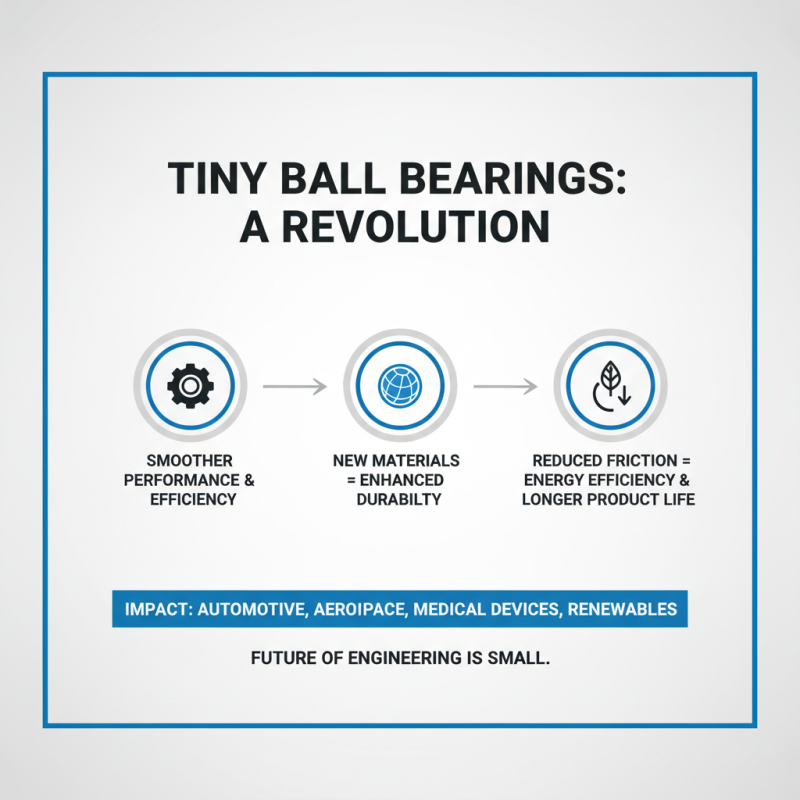
Tiny ball bearings have evolved significantly in recent years, showcasing key innovations and features that cater to various applications. The introduction of new materials, like ceramics and advanced polymers, enhances durability. These materials reduce friction and wear, leading to better performance. However, not all innovations are flawless. Some materials may struggle with extreme temperatures or heavy loads.
Another trend is the miniaturization of ball bearings. Smaller sizes are becoming more common in compact devices. This trend presents design challenges. Manufacturers need to balance the size with load capacity. If they don’t, performance may suffer. Tiny ball bearings must be precise to fit tight spaces without sacrificing functionality.
Lubrication technology has also seen advancements. New self-lubricating options reduce maintenance requirements. This is beneficial for hard-to-reach areas. Yet, these new systems can sometimes lead to over-lubrication, causing issues. Finding the right balance in lubrication remains a crucial consideration. Overall, the innovations in tiny ball bearings are promising, yet they call for careful evaluation in real-world applications.
Performance Metrics: Evaluating Smoothness in Tiny Ball Bearings
When assessing tiny ball bearings, smoothness is a key performance metric. Smooth operation reduces friction, increasing efficiency. Industry reports show that bearings with lower surface roughness offer better performance. For instance, the best designs feature a surface finish below 0.1 micron. Such precision allows for optimal rotational speed. The right material choice also plays a crucial role. Steel, ceramic, or polymer can affect smoothness differently.
It's essential to evaluate the load capacity to ensure durability. Bearings often face extreme conditions. Overloading can lead to premature failure. Performance data indicates that tiny ball bearings loaded beyond their capacity can suffer immediate wear. Regular maintenance is crucial, too. Cleaning and lubricating bearings can prolong their life significantly.
Tip: Always consider the installation alignment. Misalignment can lead to excessive vibration and reduced lifespan. Be proactive about testing bearings under actual conditions. This can reveal any hidden issues early on. Remember that small details in the design can greatly impact overall performance. Prioritize precise measurements and high-quality materials for optimal results.
Materials Science: The Role of Steel and Ceramic in Bearing Efficiency
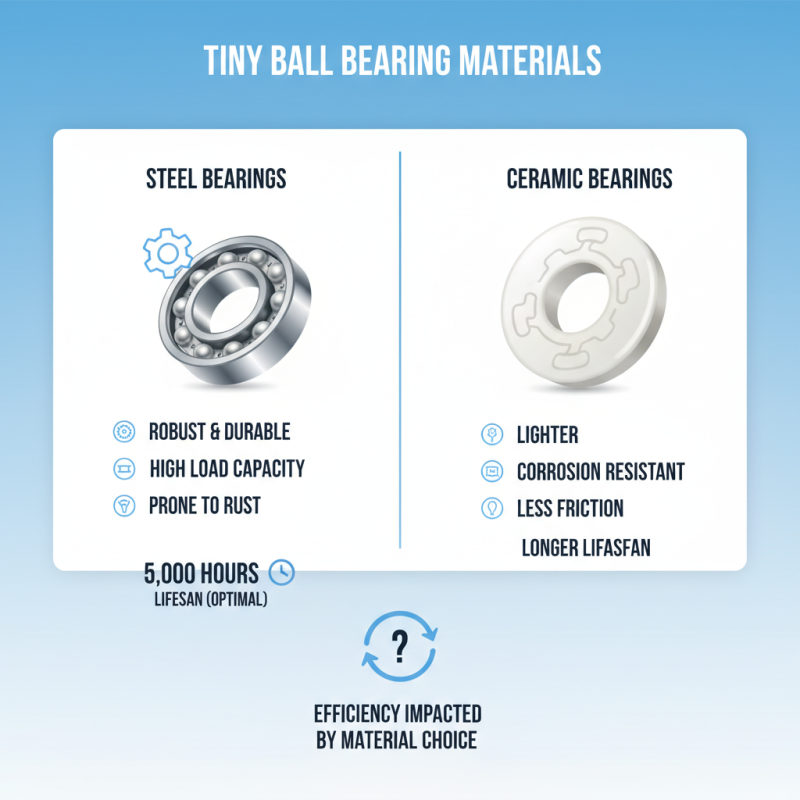
The choice of materials in tiny ball bearings significantly impacts their efficiency. Steel and ceramic are the two most common materials used. Steel bearings are known for their robustness and durability. They offer high load capacity but can be prone to rust. A recent industry report highlighted that steel bearings provide a lifespan of about 5,000 hours under optimal conditions.
Ceramic bearings, on the other hand, are lighter and resistant to corrosion. They can operate at higher speeds, often reducing friction significantly. Studies indicate that ceramic bearings can enhance performance by 50% compared to steel in specific applications. However, they are often more fragile. This fragility raises concerns about their long-term durability.
Both materials have strengths and weaknesses. Steel may be more suitable for heavy loads, while ceramic excels in high-speed applications. Manufacturers need to carefully consider their operational environment. Balancing weight, speed, and load capacity is crucial in selecting the right bearings. Ultimately, understanding these material characteristics drives optimal performance and efficiency in various mechanical systems.
Industry Applications: Where Tiny Ball Bearings Make a Difference
Tiny ball bearings play a vital role across various industries, enhancing efficiency and performance. In robotics, for instance, these components enable smoother movement in robotic arms. According to a recent study, approximately 40% of robotic failures relate to poor bearing quality. This highlights the need for precision engineering and durable materials.
In the automotive sector, tiny ball bearings are integral in electric vehicle motors. They support robust performance while minimizing energy loss. Research suggests that using high-quality bearings can increase motor efficiency by up to 5%. However, not all manufacturers follow stringent quality checks, which sometimes results in performance issues.
Even in the consumer electronics industry, their impact cannot be ignored. Tiny ball bearings contribute to the functionality of smartphones and laptops. A report indicates that about 25% of device malfunctions stem from bearing failures. It's essential for companies to invest wisely in their components and ensure regular maintenance to avoid potential setbacks.