Welcome to our websites!

China Best Vehicle Bearings Manufacturers and Suppliers?

China’s Vehicle Bearings industry has become a major sourcing base for passenger cars, commercial vehicles, and electric platforms. Its advantage is not only low production cost. It also includes dense steel, machining, heat-treatment, sealing, and logistics networks. However, supplier quality varies widely.

Grand View Research estimated the global automotive bearing market at about USD 38 billion in 2023. Fortune Business Insights reported a different estimate, near USD 40 billion. These figures are not identical. Their difference reflects varied definitions, product categories, and research methods. Both reports indicate steady growth through the next decade, driven by vehicle production, replacement demand, and electric mobility.

“ The world needs better bearings.” This statement from bearing pioneer Henry Timken remains relevant today. A supplier may present a polished catalogue, but the real test is inside the wheel hub. Buyers should examine steel grades, dimensional tolerance, grease compatibility, seal design, noise performance, and batch traceability. IATF 16949 certification can support confidence, yet it cannot replace factory audits or sample testing. That point is sometimes overlooked.

The best Chinese manufacturers combine stable process control with responsive engineering support. They should provide test records, fatigue data, inspection standards, and clear warranty terms. For electric vehicles, lower friction and acoustic performance deserve extra attention. For trucks, load capacity and contamination resistance may matter more. No single factory fits every application. This guide will compare China’s leading Vehicle Bearings manufacturers and suppliers through product capability, certifications, production experience, export reliability, and practical buyer risks. Some rankings may remain debatable. That is normal. Reliable sourcing requires evidence, not impressive promises.
China Best Vehicle Bearings Manufacturers and Suppliers?

China’s Vehicle Bearing Industry: Types, Applications, and Market Scope

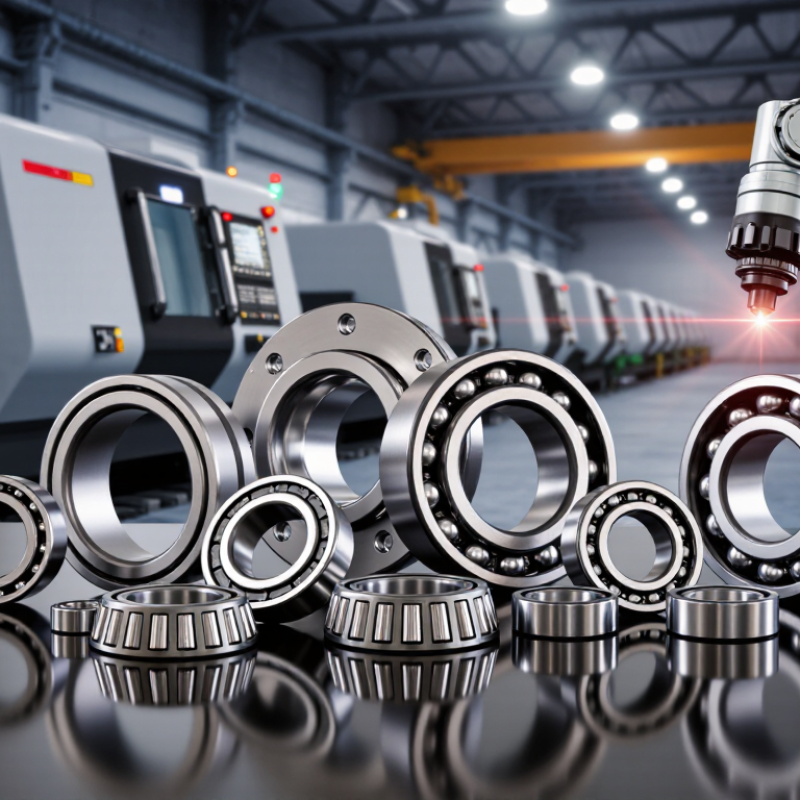
China’s vehicle bearing industry covers wheel hub, tapered roller, deep-groove ball, needle, and clutch-release bearings. Each type serves a different mechanical demand. Wheel hub bearings support radial and axial loads near the road surface. Tapered rollers handle heavy loads in commercial vehicles. Needle bearings fit compact transmission systems. Production commonly includes forging, precision grinding, heat treatment, sealing, and automated inspection. Suppliers serving passenger cars, trucks, trailers, buses, and agricultural vehicles often provide standard and customized dimensions.

Market scope extends from original equipment production to repair and replacement channels. Demand is influenced by vehicle ownership, road conditions, electric vehicle development, and export activity. Electric vehicles may reduce some engine-related bearing demand, but they increase attention on wheel hubs, gearboxes, and electric motor systems. Reliable suppliers should document steel quality, clearance grades, fatigue testing, noise control, and traceability. Certification helps, but it does not replace sample testing. A catalogue can look complete. Reality may differ.

Tips: Compare load ratings under real operating temperatures. Request test reports, dimensional drawings, and batch records. Check sealing performance against dust and water. Do not select only by price. A cheaper bearing may create earlier maintenance costs. Also, review delivery consistency and technical support before signing long-term supply agreements. Suppliers should explain limitations clearly, because no bearing performs perfectly in every vehicle or climate.

Key Standards for Evaluating Chinese Vehicle Bearing Manufacturers

China Best Vehicle Bearings Manufacturers and Suppliers?

Key Standards for Evaluating Chinese Vehicle Bearing Manufacturers

A reliable evaluation begins with documented quality systems, not attractive pricing. Check ISO 9001 certification and automotive quality procedures such as IATF 16949. Confirm that certificates match the actual production site. Some suppliers outsource heat treatment or grinding. That changes the risk.

Examine compliance with bearing standards, including ISO 492 for dimensional accuracy and ISO 281 for rating life. Ask for steel mill certificates, hardness records, cleanliness data, and heat-treatment curves. Sample reports should show radial clearance, vibration, noise, and rotational torque. Request batch traceability from raw material to final inspection. Small details matter.

Visit the factory when possible. Observe sealed storage, calibrated gauges, automated inspection, and operator training records. A capable supplier should explain failure analysis with measured evidence. Test samples under realistic loads, temperatures, and lubrication conditions. Do not rely only on a polished presentation. A certificate is useful, but it is not proof of consistent production.

Review delivery history, corrective-action speed, packaging quality, and engineering communication. Ask how they handle a rejected batch. Their answer reveals more than a sales brochure. No audit is perfect. My own evaluation can miss hidden process variation, especially during peak production. Repeat testing after several shipments is wiser than approving one excellent sample.

Key Standards for Evaluating Chinese Vehicle Bearing Manufacturers

This chart presents an editorial relevance rating from 1 to 5 for standards commonly used when assessing vehicle bearing manufacturers. ISO 9001 and IATF 16949 address quality management, ISO 281 covers bearing load ratings and rating life, ISO 15243 supports failure analysis, ISO 2859-1 defines acceptance sampling procedures, and ISO 683-17 specifies bearing steel requirements. The rating indicates evaluation relevance, not certification status or supplier performance.

Leading Manufacturing Regions and Supplier Capabilities in China

China Best Vehicle Bearings Manufacturers and Suppliers?

China’s vehicle-bearing supply chain is concentrated in several practical manufacturing regions. Zhejiang, especially Ningbo and Cixi, is known for high-volume wheel hub and small bearing production. Jiangsu supports precision machining, heat treatment, and automated assembly. Shandong’s Linqing cluster offers broad aftermarket capacity and flexible batch sizes. Liaoning and Henan remain important for larger bearings, testing, and heavy-duty engineering.

The China Bearing Industry Association reported approximately 25 billion bearing units produced in China in 2023, with industry revenue exceeding RMB 200 billion. These figures show scale, but scale does not guarantee stable quality. Supplier capability should be checked through process evidence. Look for grinding accuracy records, steel traceability, seal testing, noise inspection, and dimensional reports. Automotive-focused factories may also hold IATF 16949 certification, while ISO 9001 supports broader quality management. However, certificates alone can become paperwork. On-site audits still matter.

Tips: Request samples from two production batches. Measure bore, radial clearance, vibration, and grease leakage. Ask for actual test data, not only catalogue claims. A capable supplier should explain its failure-analysis process clearly. It should also confirm packaging performance after long-distance transport.

Regional strengths can overlap. A trading company may present itself as a manufacturer. This is easy to miss. Verify the factory address, equipment list, inspection staff, and export records. China’s supplier base is powerful, but uneven. That reality deserves careful comparison.

Quality Control, Certifications, and Production Technologies

China’s vehicle bearing manufacturers and suppliers should be judged by evidence, not attractive catalogs. Quality control begins with verified steel certificates, controlled heat treatment, and complete batch traceability. Inspectors typically check dimensions, hardness, surface roughness, radial clearance, and cleanliness. Small contamination can create noise, vibration, or early fatigue.

Reliable factories use calibrated gauges, coordinate measuring machines, and statistical process control during production. Automated grinding and superfinishing can improve raceway accuracy. Controlled assembly lines reduce handling errors. Some facilities also use laser marking, online vibration testing, and automated visual inspection. These technologies matter only when operators record results and react to deviations.

Certifications require careful review. ISO 9001 supports documented quality systems, while IATF 16949 is more relevant to automotive production. ISO 14001 may indicate structured environmental management. Buyers should confirm certificate scope, issuing body, expiry date, and factory address. A certificate alone proves little. Ask for control plans, inspection reports, material records, and sample test data.

Practical supplier audits reveal more. Observe storage conditions, oil contamination controls, calibration labels, and rejected-part handling. Request production samples from the same line used for regular orders. Compare measured results with drawings and agreed tolerances. No factory is perfect. Even advanced processes can show variation. The real question is whether the supplier detects it, explains it, and corrects it promptly. That response demonstrates experience, engineering discipline, and reliability.

How to Select a Reliable Chinese Vehicle Bearing Supplier

China has a broad vehicle bearing manufacturing base, but supplier quality can vary sharply.

A reliable supplier should provide traceable materials, stable processes, and clear technical support. Do not judge capability from a polished catalog alone.

Ask for material certificates, dimensional reports, heat-treatment records, and fatigue-test data. Request samples from the same production line used for regular orders.

Check bore diameter, radial clearance, seal condition, and noise levels. These details matter during real vehicle operation.

A supplier should explain its inspection equipment and sampling frequency without hesitation. Factory audits can reveal storage problems, mixed batches, or poorly protected finished bearings. Small signs matter.

Communication is another practical test.

Technical replies should include tolerances, load ratings, lubrication limits, and installation guidance. Vague promises are not enough.

Confirm production capacity, minimum order quantities, packaging standards, and replacement procedures in writing. Independent laboratory testing can verify critical samples before shipment. Certification helps, but it does not replace inspection.

This is where many buyers become too confident. A supplier may pass an audit and still struggle with consistency during a busy season.

Keep approval records, compare each batch, and review performance after installation. Cold starts, road dust, vibration, and water exposure often reveal weaknesses that factory samples cannot show.