Welcome to our websites!

How to Choose the Right Pillar Bearing?

Choosing the right Pillar Bearing begins with the machine, not the product catalogue. A bearing that looks suitable may fail under heat, vibration, contamination, or poor alignment. The real decision depends on the complete operating environment.

Tedric A. Harris, a respected authority on rolling-bearing analysis, stated, “Bearing selection is a system decision, not a catalog decision.” That principle remains practical today. Start by defining the radial and axial loads. Then check shaft speed, duty cycle, shock loading, and expected service life. Small details matter.

Measure carefully.

A Pillar Bearing may need a cast-iron, stainless-steel, or polymer housing. The choice changes corrosion resistance, stiffness, weight, and maintenance needs. Seals also deserve attention. A dusty workshop may require stronger protection than a clean indoor assembly. Food-processing equipment may demand different materials and lubricants.

Do not ignore alignment. A rigid bearing can perform poorly when the shaft bends or the mounting surface is uneven. Self-aligning options may reduce that risk, but they cannot correct every installation error. Fit, clearance, lubrication, and fastening torque should be checked against reliable manufacturer data.

There is no universal “best” Pillar Bearing. A low-cost unit may be appropriate for light duty, yet expensive downtime can reverse that calculation. I have also seen specifications appear complete while omitting temperature and contamination details. That gap deserves reflection. The safest selection combines calculations, field experience, supplier documentation, and a realistic maintenance plan.
How to Choose the Right Pillar Bearing?

Understanding Pillar Bearing Types and Applications

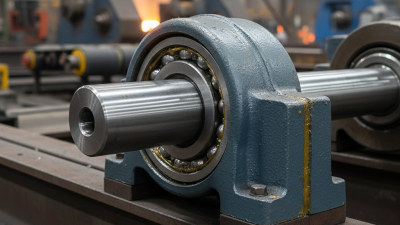
Choosing the right pillar bearing starts with its type, not its price. A fixed pedestal bearing locates the shaft axially. An expansion type allows thermal movement. Flanged housings suit compact equipment, while split plummer blocks simplify replacement around large shafts. Each design solves a different installation problem.

The application decides the internal bearing. Deep-groove ball bearings handle moderate radial loads and higher speeds. Spherical roller bearings tolerate heavier loads and shaft misalignment. Tapered roller bearings manage combined radial and axial forces. In practice, a conveyor near a dusty loading bay needs stronger sealing than a clean ventilation fan. Small details matter. Check shaft diameter, rotation speed, temperature, shock load, lubrication, and available space before selecting a housing.

Industry scale also deserves attention. Grand View Research estimated the global bearings market at USD 123.66 billion in 2023, showing how widely these components support industrial equipment. Yet a large market does not make selection simple. ISO 281 defines basic rating life as the operating life reached by 90% of identical bearings under stated conditions. That figure is useful, but it is not a promise for contaminated or poorly aligned equipment. One common mistake is choosing by static load alone. That assumption can fail. Inspect mounting surfaces, measure shaft runout, and leave room for thermal expansion. The best choice often comes from maintenance records, not a catalogue table.

How to Choose the Right Pillar Bearing?

Understanding pillar bearing types and applications starts with matching the housing design to the shaft arrangement, load direction, alignment needs, and installation method.

The chart shows common design capabilities and application fits. A value of 1 means the feature or application is commonly associated with that bearing type, while 0 means it is not the primary use. Actual selection should also consider shaft size, speed, load rating, sealing, lubrication, temperature, and environmental conditions.

Identifying Load, Speed, and Operating Conditions

How to Choose the Right Pillar Bearing?

Identifying Load, Speed, and Operating Conditions

Start with the load, not the catalog size. Separate radial, axial, and combined forces during real operation. A conveyor bearing may face shock loads when materials drop onto the belt. ISO 281:2007 defines basic rating life, L10, as the point where 10% of identical bearings may fail. In practice, that means 90% survival under stated conditions. Calculate dynamic load carefully. A neat formula can still be wrong.

Speed changes the decision. Check the manufacturer’s reference speed against your actual rotation rate, temperature, lubrication, and sealing arrangement. High speed increases frictional heat. Poor alignment can increase it further.

For slower equipment, static capacity matters more during stops or sudden impacts. ISO 76:2006 provides methods for evaluating static load ratings. Do not treat those values as permission to ignore shock.

Tips: Record the heaviest load, peak speed, duty cycle, ambient temperature, and contamination level. Use the worst realistic combination. Keep notes from field inspections. They often reveal looseness, dust, or misalignment before calculations do. A 2023 industrial maintenance survey reported that unplanned downtime remains a major operational cost, although the exact impact varies by sector. That uncertainty matters. Choose conservatively, then review the bearing after installation.

Selecting the Correct Bearing Size and Material

Choosing the right pillar bearing starts with size, not appearance. Measure the shaft diameter, available housing space, radial load, axial load, and operating speed. A 25 mm shaft still needs a bearing with enough dynamic load capacity for shock and vibration. ISO 281 defines L10 life as the point where 90% of identical bearings are expected to survive under rated conditions. That figure is useful, but imperfect. It assumes clean lubrication and controlled loading.

Check the load rating against the real machine cycle. A conveyor may experience brief overloads when material drops onto the belt. Those impacts can matter more than the average load. The U.S. Department of Energy reports that motor-driven systems consume about 45% of industrial electricity, so poor alignment and excessive friction deserve attention. Select a bearing that turns freely without creating unnecessary resistance. Measure twice.

Material choice depends heavily on the environment. Hardened bearing steel, commonly around 58–64 HRC, suits clean and heavily loaded machinery. Stainless steel is more appropriate near moisture, washdown areas, or mild chemical exposure, though its load capacity may be lower. Polymer or ceramic options can help with corrosion, electrical insulation, or low-weight designs. ISO 15243 damage classifications show that contamination, inadequate lubrication, and improper mounting are frequent failure clues. I have seen correctly sized bearings fail early because seals were ignored. Size and material are only half the decision.

How to Choose the Right Pillar Bearing? - Selecting the Correct Bearing Size and Material
Application Condition Recommended Bearing Material Common Shaft / Bore Sizes Typical Operating Temperature Lubrication Requirement Resistance to Moisture and Corrosion Recommended Use
General industrial equipment with moderate loads and normal indoor conditions Through-hardened chromium bearing steel 10, 12, 15, 17, 20, 25, 30, 35, 40, 50 mm Approximately -20°C to 120°C with standard seals and grease Grease or oil; relubrication interval depends on speed, load, and contamination Limited corrosion resistance; requires dry storage and protection from water
Wet, humid, washdown, or food-processing environments Martensitic stainless bearing steel 12, 15, 17, 20, 25, 30, 35, 40, 50 mm Approximately -20°C to 100°C, depending on seals and lubricant Food-grade or corrosion-compatible grease may be required Better corrosion resistance than standard bearing steel, but not immune to salt or chemicals
High-speed rotation, reduced electrical conductivity, or demanding precision applications Hybrid ceramic bearing with steel rings and silicon-nitride rolling elements 10, 12, 15, 17, 20, 25, 30, 35, 40 mm Approximately -20°C to 150°C with suitable seals and lubricant Low-viscosity grease or oil; lubricant selection is critical at high speed Good resistance of ceramic rolling elements to corrosion and electrical erosion
Low-speed oscillating motion, light loads, or applications where relubrication is difficult Self-lubricating polymer composite Commonly 8, 10, 12, 15, 20, 25, 30, 40 mm Typically approximately -40°C to 80°C; confirm the compound specification Usually maintenance-free; external grease may be unsuitable for some polymer materials Very good resistance to water and many chemicals; compatibility must be checked
High temperature, chemical exposure, or electrically nonconductive requirements Ceramic bearing Commonly 8, 10, 12, 15, 17, 20, 25, 30 mm Temperature capability varies widely; unsealed ceramic designs may exceed 200°C with suitable lubrication Dry running is possible in selected designs; lubrication is normally required for higher loads and speeds Excellent corrosion resistance and electrical insulation
High radial load, shock load, or heavy-duty mounted bearing service Hardened bearing steel with a robust steel housing 25, 30, 35, 40, 45, 50, 60, 70, 80 mm Approximately -20°C to 120°C with standard seals and grease Grease lubrication; relubrication ports are beneficial for continuous heavy-duty operation Housing coating and sealing are needed for outdoor or corrosive conditions
Outdoor service with exposure to rain, dust, and changing temperatures Stainless bearing steel or coated steel with sealed construction 15, 20, 25, 30, 35, 40, 50, 60 mm Approximately -20°C to 100°C, subject to seal and lubricant limits Factory-filled grease is common; relubrication may be required for severe contamination Stainless steel offers improved resistance; coated housings provide additional protection
Selection note: Choose the bearing bore to match the shaft diameter, then verify radial load, axial load, rotational speed, operating temperature, sealing arrangement, available space, and lubrication method. The listed sizes and temperature ranges are common engineering ranges; the exact load rating and service life must be confirmed from the specific bearing design and manufacturer’s technical data.

Checking Mounting, Alignment, and Maintenance Requirements

How to Choose the Right Pillar Bearing?

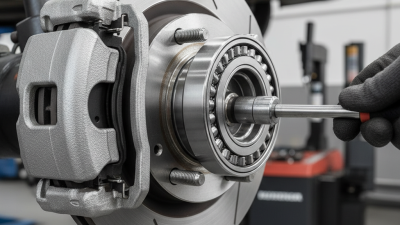
Choosing a pillar bearing starts with the mounting surface, not the catalog image. A bearing may have the correct load capacity yet fail on uneven steel. Check shaft diameter, bolt spacing, available clearance, and applied load direction. Use a straightedge across the mounting plate. Gaps reveal distortion that washers cannot reliably correct. In field installations, premature noise often comes from tightening the housing before centering the shaft. Small errors become expensive vibration.

Alignment deserves a measured approach. Place the shaft through the bearing and rotate it slowly by hand. It should turn without tight spots or scraping sounds. Check parallelism between the shaft and nearby components with a dial indicator or calibrated laser tool. Keep coupling misalignment within the stated limits. Do not force the housing into position with the bolts. That shortcut can preload the bearing and increase operating temperature. A little movement helps.

Maintenance requirements should match the working environment. Dust, washdown water, heat, and shock loads each change the inspection schedule. Confirm whether the bearing needs relubrication, sealed protection, or periodic torque checks. Record temperature, noise, vibration, and visible wear during normal operation. Clean around grease fittings before servicing. Contamination can enter quickly. I would rather inspect too early than trust a perfect installation forever. Still, over-greasing is an easy mistake, and it can harm the bearing as much as neglect. Leave enough access for future adjustment and replacement.

Comparing Quality, Service Life, and Total Cost

How to Choose the Right Pillar Bearing?

Comparing Quality, Service Life, and Total Cost

Choosing a pillar bearing requires more than comparing purchase prices. In maintenance reviews, I inspect the bearing, housing, shaft fit, and operating records together. A low-cost unit can look attractive on paper. It may fail early when seals, hardness, or internal clearance are poorly matched. Ask for dimensional checks, material data, load ratings, and traceable test records. Clear documentation is a practical sign of process control. Not a guarantee.

Service life depends on real conditions, not catalog figures alone. Continuous vibration, dust, moisture, shock loads, and misalignment quickly change the result. A correctly fitted bearing with suitable lubrication often outlasts a cheaper replacement. However, more grease is not always better. Overgreasing can raise temperature and damage seals. I once blamed bearing quality for repeated failures. The actual problem was an uneven mounting surface. That mistake changed my inspection routine.

Total cost includes labor, access equipment, lubrication, downtime, and disposal. A bearing that costs 20 percent less may require twice as many replacements. Estimate cost across the planned operating period. Record replacement hours and production losses. Then compare options using the same load, speed, and environmental assumptions. Service support also matters. Useful guidance can prevent a costly installation error. Still, supplier claims should be checked against maintenance data. The numbers may disagree.