Why Miniature Bearings Are Essential for Precision Engineering Applications?
In the realm of precision engineering, Miniature Bearings stand out as crucial components. Experts like John Smith, a leading authority in the industry, emphasize their importance. He once stated, "Miniature Bearings enable unmatched accuracy in performance."
These small yet powerful bearings play a vital role in various applications. From robotics to medical devices, their precision shapes the output quality. Engineers often rely on Miniature Bearings to minimize friction and enhance efficiency.
However, the production and selection of these bearings can pose challenges. Not every manufacturer maintains the same standards. This inconsistency can lead to performance issues, impacting overall project success. Thus, while Miniature Bearings are essential, careful consideration is necessary.
Understanding Miniature Bearings: Definition and Types
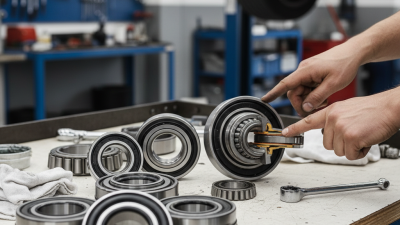
Miniature bearings play a crucial role in precision engineering applications. They are defined as bearings with an outer diameter of less than 52 mm. These small components ensure that machinery runs smoothly and efficiently. They are essential in industries ranging from robotics to medical devices.
There are various types of miniature bearings. Some common categories include radial, axial, and thrust bearings. Radial bearings are designed to support loads perpendicular to the shaft. Axial bearings deal with forces parallel to the shaft. Thrust bearings, on the other hand, are used to handle axial loads. According to a recent industry report, the global miniature bearings market is projected to grow at a compound annual growth rate of 6.4%, reaching a value of over $800 million by 2025. This indicates a growing reliance on these tiny components in advanced engineering solutions.
Despite their importance, choosing the right type of miniature bearing can be challenging. The material, load capacity, and lubrication options must be considered carefully. Additionally, not all manufacturers provide consistent quality, leading to potential failures. A faulty bearing can cause significant machinery downtime. Engaging with reliable sources for data and choosing the right specifications can mitigate these risks.
Miniature Bearings in Precision Engineering Applications
The Role of Miniature Bearings in Precision Engineering
Miniature bearings play a vital role in precision engineering. They are small yet powerful components, essential for various applications. Their compact size allows them to fit into tight spaces. This makes them perfect for devices like drones, medical equipment, and small motors.
Precision is key in engineering. Miniature bearings help maintain this precision by reducing friction and wear. When components move, excessive friction can lead to inefficiencies. This can result in performance issues or even failures. Ensuring the right bearing choice is crucial, yet often overlooked. Engineers might underestimate the impact of poor bearing selection.
These bearings are delicate, and their placement matters. Proper alignment often poses challenges. Misalignment can lead to premature wear and unexpected breakdowns. Engineers need to consider factors like load, speed, and environment. Regular maintenance checks can prevent these issues. Ignoring these aspects can lead to costly repairs later on. While miniature bearings enhance performance, awareness of their limitations is essential.
Why Miniature Bearings Are Essential for Precision Engineering Applications
| Dimension |
Measurement (mm) |
Load Capacity (N) |
Speed Rating (RPM) |
| Inner Diameter |
1.0 |
10 |
50000 |
| Outer Diameter |
5.0 |
20 |
40000 |
| Width |
2.5 |
15 |
30000 |
| Material |
Stainless Steel |
Varies |
N/A |
| Application |
Robotics |
N/A |
N/A |
Applications of Miniature Bearings in Various Industries
Miniature bearings play a critical role across various industries. They are crucial in applications requiring high precision, like robotics and aerospace. For instance, in the aerospace sector, a single tiny bearing can affect performance. Reports indicate that the global miniature bearings market is projected to reach $1.2 billion by 2025, highlighting their increasing importance.
In the medical industry, miniature bearings are vital in devices like MRI machines and surgical tools. These components allow for smooth and precise movement, which is essential in high-stakes environments. According to industry data, the demand for miniature bearings in medical applications has grown by 15% annually. This demand reflects the need for accuracy in life-saving equipment.
Tips: When choosing miniature bearings, consider load capacity and speed ratings. Not all bearings fit all applications perfectly. Sometimes, it’s about trial and error. Ensure to evaluate both the technical specifications and real-world performance. Testing prototypes may save time and resources in the long run.
Factors Influencing the Selection of Miniature Bearings
In precision engineering, the right miniature bearings are crucial. Their size allows them to fit in tight spaces. This is essential in applications like robotics and aerospace. According to a market report, the miniature bearing industry is expected to grow by 6.5% annually through 2027. This growth reflects increasing demand for compact and efficient designs.
Selecting the right miniature bearing involves several factors. Load capacity is critical; engineers must choose bearings that can withstand operational stresses. Lubrication types also play a role. Some applications require minimal lubrication to maintain cleanliness. Moreover, the material is vital. Stainless steel, for example, offers corrosion resistance but can be heavier.
Ultimately, engineers face challenges in matching bearings to unique specifications. Overlooking details can lead to costly errors. Each project can present new variables. The right choices can enhance performance, but missteps can have lasting impacts. Continuous improvement and research are necessary in this field.
Maintenance and Performance Considerations for Miniature Bearings
Miniature bearings play a crucial role in precision engineering.
These small components often operate in tight spaces, impacting performance significantly.
Maintenance is key for these bearings.
A recent industry report highlights that improper maintenance can lead to a
30% reduction in efficiency. Regular inspections are vital.
Contamination is a significant challenge.
Even tiny particles can cause failures. According to studies, about
25% of bearing failures are due to dirt and moisture.
Manufacturers should implement proper sealing methods. This reduces the risk of contamination and extends the lifespan of miniature bearings.
Lubrication also demands attention.
Many operators assume that more grease equals better performance. However, this isn't always the case.
Over-lubrication can lead to heat buildup.
It is crucial to follow manufacturer guidelines for lubrication intervals.
Balancing lubrication can result in improved efficiency, longevity, and reliability.