China’s conical bearing industry serves automotive, mining, agricultural, and industrial equipment markets worldwide. Its manufacturers offer tapered roller bearings, matched sets, customized dimensions, and replacement solutions. However, a long supplier list does not guarantee dependable performance. Quality must be verified through evidence.
Tedric A. Harris, a respected rolling-bearing researcher, wrote, “A bearing is not an isolated component; it is part of a system.” This principle remains highly practical. A Conical Bearing depends on accurate raceways, controlled taper angles, suitable steel, and stable heat treatment. It also requires correct preload, lubrication, shaft alignment, and housing support. Small errors can create visible consequences. Think of a hot gearbox, uneven wear marks, or unexpected vibration during a night shift.
This guide examines China’s top conical bearing manufacturers and suppliers through an engineering-focused lens. It considers production experience, inspection equipment, material traceability, load ratings, dimensional consistency, and international quality systems. Certifications such as ISO 9001 may support credibility, but certificates alone prove little. Factory audits, test reports, sample approval, and customer references provide stronger evidence.
Some suppliers excel at standard automotive sizes. Others perform better with heavy-duty or customized applications. Not every supplier fits every duty. That matters.
A careful buyer should compare dynamic load capacity, static load capacity, sealing design, operating temperature, delivery reliability, and technical support. Price deserves attention, but it should not dominate the decision. A cheaper bearing may produce higher maintenance costs later. This overview cannot replace application testing, and its evaluations may require further verification. Still, it offers a practical starting point for selecting a reliable Conical Bearing partner in China.
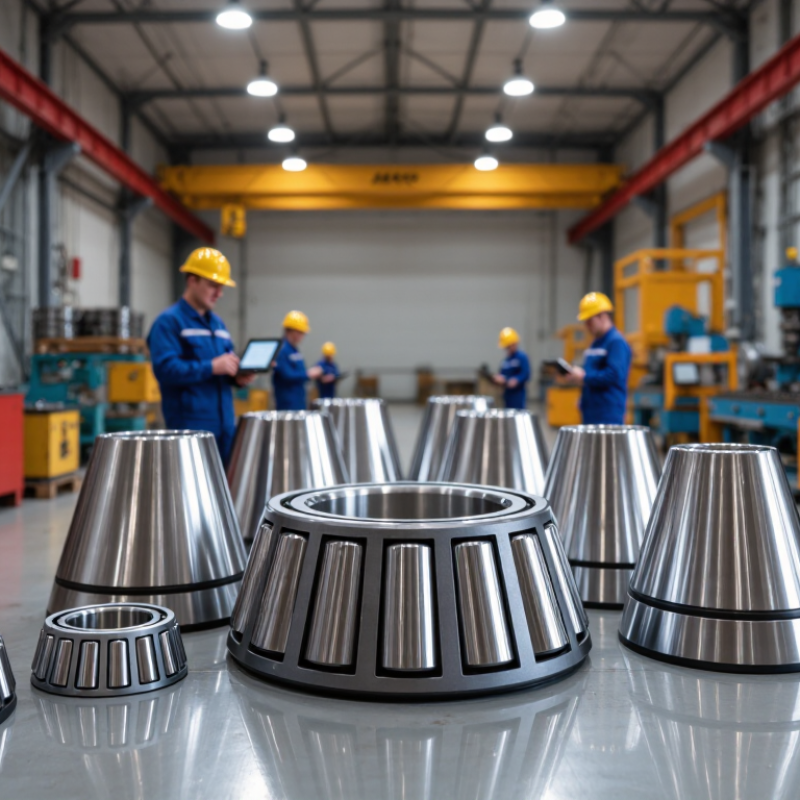
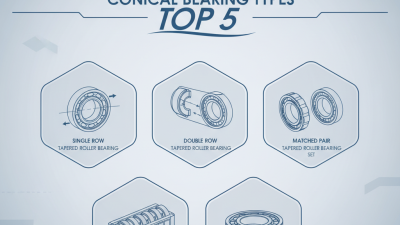
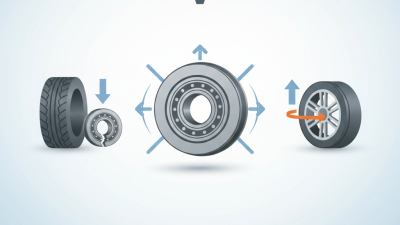
Conical bearings use a simple but highly calculated arrangement. Each unit contains an inner ring, an outer ring, tapered rollers, and a cage. The roller paths meet at a common point, allowing smooth rolling with controlled sliding. This geometry handles radial loads and axial loads in one assembly. That matters. Load direction changes do not automatically require a different bearing type.
During operation, tapered rollers transfer force through their angled contact surfaces. Preload removes unwanted clearance, while correct lubrication limits friction, noise, and heat. Too much preload can create heat and shorten service life. Too little preload may permit vibration and uneven wear. Experienced engineers check shaft alignment, housing accuracy, speed, temperature, and contamination before selecting a model. Numbers alone are not enough. Installation still matters.
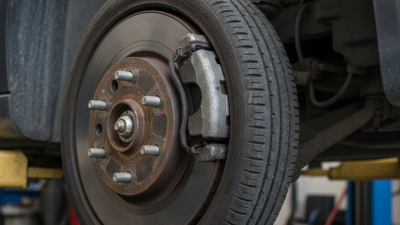
In China, capable bearing manufacturers and suppliers commonly support automotive hubs, gearboxes, construction equipment, conveyors, and agricultural machines. Single-row designs suit many general duties, while double-row versions can manage higher combined loads. Seals, cage materials, heat treatment, and inspection records influence practical reliability. An oversized bearing is not automatically safer. It may raise friction, cost, and mounting stress. Application data should guide the choice, though field conditions are often messier than drawings suggest. That gap deserves attention.
China’s conical bearing manufacturing industry has developed from basic machining into an integrated engineering sector. Manufacturers now combine forging, CNC turning, grinding, heat treatment, and automated inspection. These processes support bearings used in trucks, agricultural machinery, gearboxes, and industrial equipment. Production clusters benefit from dense supplier networks and experienced technical workers. This shortens procurement cycles and allows suppliers to adjust bore sizes, load ratings, seals, and packaging for different markets.
Market position matters beyond production volume. Chinese suppliers increasingly serve customers across Asia, Europe, North America, and emerging industrial regions. Their advantages often include competitive pricing, flexible order quantities, and practical customization. Reliable producers document steel composition, hardness, dimensional tolerances, and noise results. They also use coordinate measuring machines and load-testing equipment to reduce variation between batches. Ask for inspection records.
Yet the industry is not perfectly uniform. Some factories still depend heavily on manual checks, inconsistent process control, or unclear traceability. That weakness can appear after installation, when vibration and heat increase under load. Experienced buyers should evaluate sample bearings, audit production steps, and compare test data with stated specifications. Delivery history matters too. A polished catalog is not proof of stable quality.
China’s position continues to strengthen through automation, materials research, and closer technical cooperation with equipment makers. The next challenge is less about making more bearings. It is about making every batch predictable. That remains unfinished work.
The chart compares the nominal bore, outside diameter, and bearing width of commonly specified metric single-row tapered roller bearings. These standardized dimensions support interchangeability across China's manufacturing, automotive, machinery, and export supply chains. Dimensions are reference values for the 302 series and should be verified against the applicable ISO 355 designation and technical catalogue.
Reference: ISO 355 metric tapered roller bearing designation and commonly published standard bearing dimensions.
Leading Chinese Conical Bearing Manufacturers and Suppliers
China has become a major sourcing base for conical bearings used in trucks, gearboxes, agricultural machines, and industrial conveyors. Grand View Research estimated the global bearing market at over USD 130 billion in 2023, with demand supported by automation and vehicle production. This growth creates opportunity, but price alone is a poor purchasing guide.
Experienced Chinese manufacturers usually control turning, heat treatment, grinding, and final assembly in one production system. Buyers should request steel certificates, hardness records, raceway roughness results, and dimensional inspection reports. Tapered roller bearings must also meet the correct load and clearance requirements under ISO 281 life calculations. Small deviations can cause heat, noise, or premature spalling. They matter.
Reliable suppliers provide traceability from raw material to packed bearing. Batch numbers should match inspection documents and sample labels. In practical audits, check grinder maintenance, cleanliness near assembly lines, and storage humidity. These details often reveal more than a polished showroom. Third-party testing can verify radial runout, rotational torque, and rated load performance.
Industry data is useful, but not perfect. Public reports sometimes combine different bearing types and regional definitions. Buyers should compare specifications, test methods, and delivery records before accepting market claims. A supplier with clear engineering communication can adjust internal geometry, seal selection, and preload for a specific application. That practical response is often more valuable than a low initial quotation.
| Product Category | Construction | Primary Load Capability | Typical Applications | Common Material | Relevant Standards | Key Selection Considerations |
|---|---|---|---|---|---|---|
| Single-Row Tapered Roller Bearing | One inner-ring and roller assembly matched with one outer ring; separable design. | Supports combined radial and axial loads, with the axial capacity determined by the contact angle. | Wheel hubs, gearboxes, reducers, conveyors, pumps and general industrial machinery. | Through-hardened bearing steel, commonly chromium steel equivalent to 100Cr6 or GCr15. | ISO 355 GB/T 297 | Radial load, axial load direction, contact angle, clearance, speed and mounting arrangement. |
| Matched Single-Row Pair | Two single-row tapered roller bearings installed as a pair in an opposed arrangement. | Handles radial loads and axial loads in both directions when correctly adjusted. | Machine-tool spindles, vehicle axles, industrial gear drives and rotating shafts. | Hardened bearing steel for rings and rollers; cage material depends on speed and operating conditions. | ISO 355 ISO 492 | Preload or endplay, pair arrangement, shaft rigidity, thermal expansion and alignment. |
| Double-Row Tapered Roller Bearing | Two roller rows share a common inner or outer ring arrangement. | High radial load capacity with axial load support in both directions. | Heavy-duty gearboxes, rolling mills, mining equipment and large transmission systems. | Through-hardened or case-hardened bearing steel selected according to load and fatigue requirements. | ISO 355 GB/T 297 | High load capacity, housing space, internal clearance, lubrication and installation accuracy. |
| Four-Row Tapered Roller Bearing | Four tapered roller rows arranged to maximize load distribution in a compact radial space. | Very high radial and axial load capacity; designed for heavy shock and continuous loading. | Rolling-mill work rolls, heavy-duty reduction systems and large material-processing equipment. | High-cleanliness bearing steel with heat treatment suited to heavy industrial service. | ISO 355 ISO 492 | Roll-neck dimensions, maximum load, roll speed, lubricant delivery and maintenance access. |
| Flanged or Hub-Integrated Tapered Bearing Unit | Tapered roller bearing elements integrated with a hub or flange assembly. | Supports combined loads while simplifying mounting and wheel-end integration. | Automotive wheel ends, trailers, agricultural machinery and off-highway equipment. | Hardened bearing steel; integrated units may include seals, studs or machined hub components. | ISO 492 GB/T 297 | Hub geometry, sealing, bolt pattern, runout, preload, corrosion protection and service life. |
| High-Precision Tapered Roller Bearing | Closely controlled geometry, runout, clearance and surface finish for precision rotation. | Combined radial and axial load support with improved rotational accuracy. | Machine tools, precision gearboxes, testing equipment and high-accuracy rotating assemblies. | High-quality bearing steel; controlled heat treatment and precision grinding are required. | ISO 492 ISO 199 | Precision class, preload, noise, vibration, temperature rise, lubrication and shaft accuracy. |
| Corrosion-Resistant Tapered Bearing | Tapered roller construction using corrosion-resistant materials or protective surface treatments. | Combined load capability comparable to the selected bearing design, subject to material choice. | Food-processing equipment, marine machinery, outdoor systems and chemically exposed environments. | Stainless steel or specially treated bearing steel, depending on load and corrosion requirements. | ISO 355 ISO 492 | Corrosive medium, washdown conditions, allowable load reduction, sealing and lubricant compatibility. |
| Custom-Configured Tapered Bearing | Dimension, clearance, preload, cage, seal or material configuration adapted to a specific machine. | Load and speed capability depend on the selected geometry, material and operating conditions. | Special transmissions, construction equipment, energy systems and non-standard machinery. | Common options include chromium bearing steel, case-hardened steel and corrosion-resistant steel. | ISO 355 ISO 492 GB/T 297 | Technical drawing, operating loads, speed, temperature, lubrication, service life and inspection plan. |
China Bearing Industry Association statistics for 2023 reported bearing production above 26 billion units. That scale creates choice, but also uneven process control. Evaluate manufacturers through evidence, not attractive catalogs. Request material certificates, heat-treatment records, dimensional reports, and batch traceability. Confirm whether each report matches the delivered lot.
During a factory visit, inspect grinding lines, cleanliness controls, storage conditions, and inspection equipment. Ask for capability data on bore diameter, cone angle, and runout. A practical target is Cpk above 1.33 for critical dimensions, although application risk may require more. Verify load ratings against ISO 281 calculations, not copied tables. Check hardness and metallurgical results against the agreed specification. A supplier claiming ISO 9001 certification should provide a valid certificate and confirm its actual scope.
The 2024 Mordor Intelligence bearing market analysis identifies Asia-Pacific as the largest regional market, increasing competitive pressure among suppliers. Price comparisons should include tooling, testing, packaging, and replacement terms. Require a pre-production sample and an independent inspection before approval. Review failure analysis procedures, response times, and engineering communication. I would also examine lubricant compatibility and seal performance under heat, dust, and misalignment. Some evaluations stop too early. That is a mistake. A polished audit can still miss inconsistent subcontracted heat treatment. Ask who performs every critical operation, then verify it with records.
China’s conical bearing manufacturers serve automotive, agricultural, mining, and industrial equipment markets. Reliable suppliers control steel quality, heat treatment, grinding accuracy, and assembly cleanliness. Many operate under ISO 9001 systems, but certification alone proves little. Buyers should review inspection records, equipment calibration, and batch traceability.
Quality checks often include bore diameter, radial runout, hardness, surface roughness, and rotational noise. Load testing can reveal problems hidden by visual inspection. Experienced suppliers provide dimensional reports and sample approvals before mass production. Small details matter. A slight clearance error may create heat, vibration, or early wear.
Customization may involve bore size, cage material, internal clearance, seals, grease, packaging, and marking. Export services should include commercial invoices, packing lists, certificates of origin, and suitable moisture protection. Suppliers familiar with international shipments can also advise on pallet strength and container loading. Communication remains critical. Drawings must show tolerances clearly, and changes need written approval. No supplier is perfect; even a strong factory can miss a detail during a busy production period. Independent inspection and trial orders remain sensible safeguards.