Top Groove Bearing Manufacturers for Global Buyers
Choosing a Groove Bearing manufacturer is not just a price comparison. Buyers need to consider load capacity, operating speed, sealing, noise, and supply consistency. A bearing that looks suitable on a specification sheet may perform differently in a dusty workshop or a hot production line. Small details matter.
Industry references can help buyers ask better questions. ISO 281:2007 defines methods for calculating the basic rating life of rolling bearings, offering a common technical basis for comparing designs. Grand View Research’s bearing-market analysis tracks demand across sectors such as automotive and industrial machinery, where reliability and production continuity are important purchasing concerns. These sources provide context, but they cannot verify a supplier’s actual factory quality or delivery record.
This guide introduces Groove Bearing manufacturers serving global buyers and outlines practical points for evaluating them. Look beyond catalog dimensions: examine material specifications, machining tolerances, lubrication options, quality-control documentation, and available customization. Ask how the supplier manages sample approval and repeat orders. Fit is everything.
A strong shortlist should also account for communication, lead times, and after-sales support across regions. Request current test records and confirm that the stated standards match your application. No shortlist is perfect; buyer requirements differ, and published information may not reveal production-floor performance. Treat rankings as a starting point, then validate claims with technical documents, samples, and direct supplier discussions.
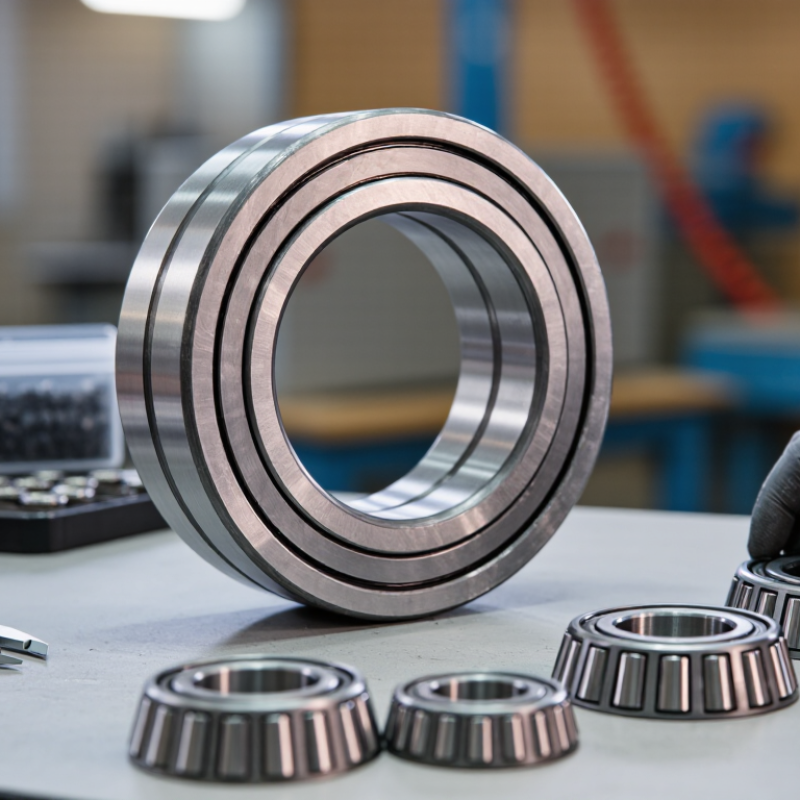
What Groove Bearings Are and How They Work
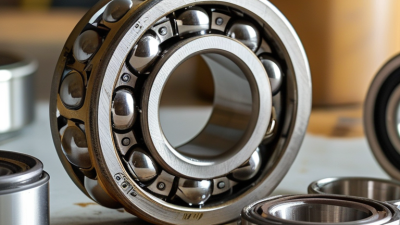
A groove bearing usually means a deep-groove ball bearing. Its inner and outer rings contain continuous curved raceways, with hardened steel balls rolling between them. A cage spaces the balls and limits contact. This geometry handles radial loads and moderate axial loads in either direction. In a workshop, the action is small but clear: the shaft turns, the inner ring follows, and the balls roll along the fixed outer raceway.
The bearing works by spreading load across several rolling contacts, reducing sliding friction. Grease or oil forms a thin film between the balls and raceways; too little lubricant can raise heat, while excess grease can also increase drag. Fit matters. A shaft that is too tight may reduce internal clearance, and misalignment can create uneven contact. ISO 281:2007 defines basic rating life, L10, as the life that 90% of a sufficiently large group of identical bearings are expected to reach or exceed under stated conditions. It is a useful benchmark, not a promise for every machine. Real dust, poor mounting, and changing loads complicate the estimate. That model is useful, but incomplete. A technician should also check vibration, temperature, seals, and lubrication history. A clean bearing can still fail early.
| Topic | Specification or Feature | How It Works or What Buyers Should Know |
|---|---|---|
| Bearing Basics | ||
| Bearing type | Deep groove ball bearing | A rolling-element bearing with deep, continuous raceway grooves in both the inner and outer rings. The grooves guide the balls as the bearing rotates. |
| Main components | Inner ring, outer ring, balls, cage, and optional seals or shields | The balls roll between the two raceways; the cage spaces and guides them. Seals or shields help limit contaminant entry and retain lubricant. |
| Load support | Primarily radial loads; also moderate axial loads in either direction | The standard single-row design is suited to combined radial and axial loading within its operating limits. Heavy axial loads may require a different bearing arrangement. |
| Operating characteristics | Low friction, compact design, and suitability for relatively high speeds | Actual speed and load limits depend on bearing size, internal clearance, lubrication, seals, temperature, and installation conditions. |
| Common configurations | Open, shielded, and sealed | Open bearings are accessible for lubrication but offer less protection. Shields provide non-contact protection; contact seals generally offer stronger contamination protection but can add friction. |
| Common Boundary Dimensions | ||
| 6204 | Bore (d): 20 mm; outside diameter (D): 47 mm; width (B): 14 mm | Common single-row deep groove ball bearing size. Dimensions shown are standard boundary dimensions; confirm the exact product configuration before ordering. |
| 6205 | Bore (d): 25 mm; outside diameter (D): 52 mm; width (B): 15 mm | Often used where a larger shaft or load capacity is needed than in the 6204 size, subject to the application’s operating conditions. |
| 6206 | Bore (d): 30 mm; outside diameter (D): 62 mm; width (B): 16 mm | Provides a larger mounting envelope than the 6205 size. Check shaft and housing fits, load ratings, clearance, and speed requirements. |
| Dimension reference | d × D × B, in millimetres | These are common boundary dimensions associated with the listed bearing designations. Boundary dimensions are standardized; internal design details and performance can vary by product and manufacturer. |
| Manufacturer and Supplier Evaluation for Global Buyers | ||
| Technical documentation | Drawings, dimensional tolerances, load ratings, speed limits, and clearance options | Request documentation for the exact bearing configuration and verify that it matches the shaft, housing, duty cycle, and applicable standards. |
| Quality controls | Traceability, inspection records, and documented production controls | Ask how batches are identified and inspected. Verify any claimed quality-system certification with the issuing certification body. |
| Materials and heat treatment | Specified ring and rolling-element materials, with controlled heat treatment | Confirm material and process requirements against the application, especially where loads, temperatures, corrosion, or service life are critical. |
| Lubrication and sealing | Grease type and fill, seal or shield arrangement, and relubrication requirements | Check compatibility with operating temperature, speed, environment, and maintenance plans. Do not assume that visually similar sealed bearings contain the same lubricant. |
| Global sourcing and delivery | Export packaging, lead time, batch consistency, and shipping documentation | Clarify the delivery terms, packaging protection, origin and customs documents, and how product substitutions or specification changes are handled. |
| Application verification | Load, speed, temperature, contamination, fit, and expected operating life | Provide the supplier with the actual operating conditions. A matching bore and outside diameter alone do not establish that a bearing is suitable. |
Related Posts
-
Top 10 Deep Ball Bearings for Enhanced Performance and Durability?
-
How to Choose the Right Deep Ball Bearing
-
7 Best SKF Needle Bearings for 2026
-
2026 Top Ball Bearing Types and Cost Guide?
-
Top 5 SKF Needle Bearing Benefits for Global Buyers?
-
What is a Front Axle Bearing and How to Choose the Right One