Choosing the right Auto Wheel Bearing in 2026 requires more than matching a familiar brand or a low price. Modern vehicles may use integrated hub assemblies, advanced seals, or magnetic ABS encoder rings. A bearing that looks identical can still send incorrect wheel-speed signals. Small details matter.
Reliable selection begins with the vehicle identification number, exact model year, engine, drivetrain, and axle position. Confirm the original part number through a trusted manufacturer catalogue or an authorized distributor. Then compare bore diameter, outer diameter, width, load rating, sealing design, and sensor compatibility. Fit is not enough. The bearing must withstand the vehicle’s weight, cornering forces, road moisture, and repeated temperature changes.
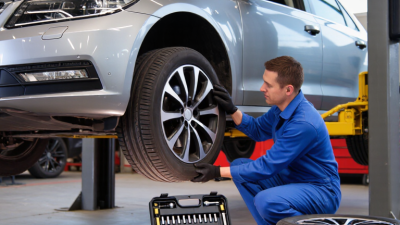
During workshop inspections, technicians often find damage caused by installation rather than poor manufacturing. Pressing on the wrong race can mark the bearing before the vehicle leaves the lift. Contamination, uneven torque, and reused fasteners can create noise or play within weeks. I have also seen buyers trust online photographs, only to discover a missing encoder ring. That mistake is costly.
This guide will examine practical buying decisions, quality indicators, compatibility checks, and installation concerns. It will also question common assumptions, because even experienced owners can overlook a small specification. Always compare technical data with the vehicle maker’s requirements and seek qualified advice when uncertainty remains. A quiet test drive is useful, but it cannot replace correct measurement and inspection.
Identify Vehicle Fitment Using OEM, VIN, and OE Bearing Specifications
Choosing the right auto wheel bearing starts with accurate vehicle fitment. An OEM reference number offers a useful starting point, but it should not be trusted alone. Production changes can affect bearing size, sensor design, and mounting details.
Use the full VIN when checking compatibility. It can reveal the vehicle’s engine, drivetrain, production date, and factory configuration. Ask for the VIN before ordering. A short vehicle description is often not enough. I have seen two vehicles from the same year use different bearing assemblies. That small difference can waste time and money.
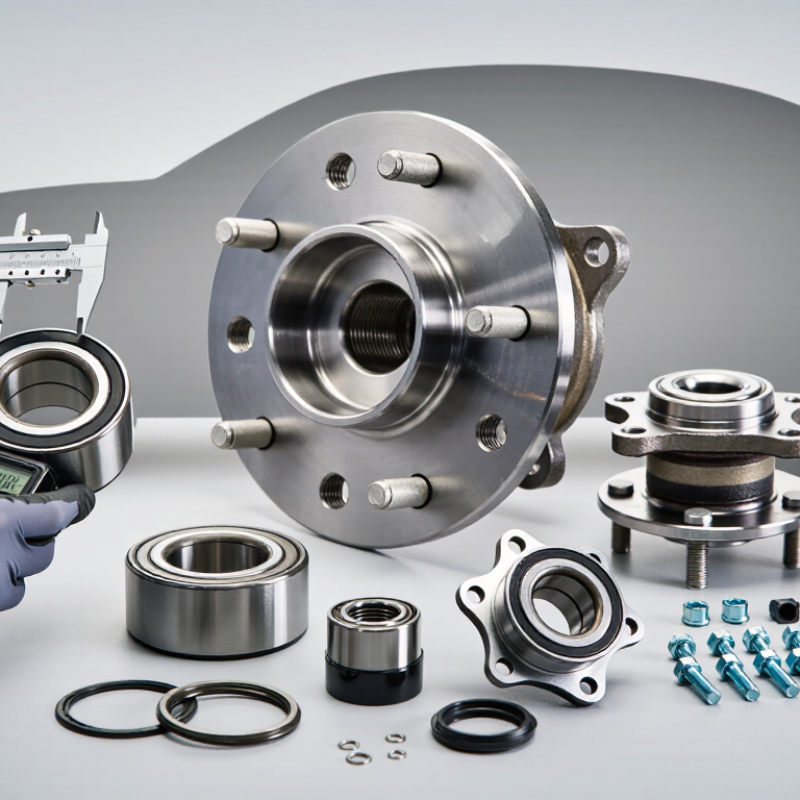
Compare the OE bearing specifications carefully. Check inner and outer diameter, width, flange design, bolt pattern, load rating, and seal structure. Confirm whether the bearing includes an integrated speed sensor ring. Some versions are side-specific. Match the connector position and cable length too. Do not ignore the installation side.
During inspection, compare the replacement with the removed part before fitting it. Lay them side by side on a clean bench. Check the mounting holes and sensor face visually. Still, mistakes happen. A catalog may contain an incorrect image or incomplete note. When uncertain, recheck the VIN, OEM number, and measured dimensions with a qualified parts specialist. Exact data is safer than guessing.
Choosing an auto wheel bearing should begin with load, not appearance. Check the dynamic load rating, C, in the technical specification. Then estimate the equivalent dynamic load, P, from vehicle weight, cornering forces, braking, and road impacts. ISO 281 uses L10 = (C/P)p to estimate bearing life in millions of revolutions. The exponent p is 3 for ball bearings and 10/3 for roller bearings.
A higher C value usually improves calculated life. However, a small change in P can alter the result sharply. If C is twice P, a ball bearing gives an L10 value of eight million revolutions. That sounds impressive. Yet this is a statistical rating, not a promised service distance. Real wheel bearings face water, dust, poor alignment, preload errors, and uneven installation.
Inspect the hub fit and sealing surfaces before selecting a replacement. Measure unusual play, listen for rough rotation, and check whether the bearing runs hot after a road test. Do not select only by bore and outer diameter. I have found that load calculations can look correct while contamination ruins the bearing early. The formula is valuable, but incomplete. When road shock is severe, use a sensible safety margin and verify the actual mounting conditions.
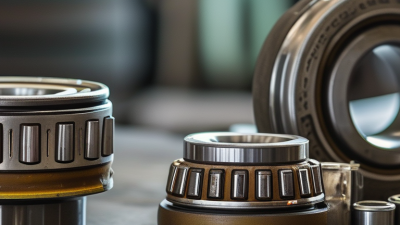
Choosing a wheel bearing starts with load direction, not catalog habit. Ball bearings suit radial loads and moderate axial loads in both directions. They usually tolerate speed well, but heavy cornering loads can expose their limits. Tapered-roller bearings carry higher radial loads and substantial axial loads. Use them when wheel offset, braking, or cornering creates strong thrust. They normally require matched pairs and accurate preload. Too loose, and the hub may wobble. Too tight, and heat can damage the raceway.
ISO 281:2007 defines basic rating life, L10, as the life reached by 90% of identical bearings under stated conditions. That figure matters, but it is not a vehicle-life guarantee. ISO 76:2006 also evaluates static load ratings, helping engineers assess denting risks during impacts or stationary loading.
Check the bearing’s calculated radial and axial loads against these ratings. Then inspect sealing, lubricant temperature, mounting accuracy, and shaft hardness. A clean installation matters more than many buyers expect. In field work, I would recheck preload after measuring hub rotation and end play. This step is easy to skip. It should not be. One practical mistake is selecting a tapered roller bearing only because it appears stronger. If the application needs low friction, high speed, or reversible axial capacity, a properly rated ball bearing may perform better. The wheel’s actual geometry decides.
Choosing the right auto wheel bearing begins with accurate hub measurements, not a quick catalog search. Measure the bearing bore, outer diameter, width, flange thickness, bolt spacing, and axle spline carefully. A small mismatch can create play, noise, or uneven tire wear. I have seen visually identical hubs fit differently once installed. Check the vehicle’s model year, drivetrain, brake system, and axle position before ordering.
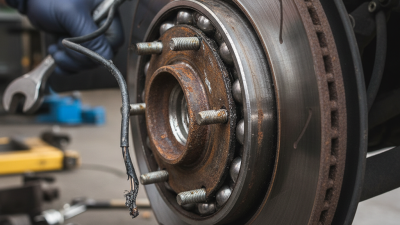
ABS sensor compatibility deserves equal attention. Some hubs include an integrated magnetic encoder, while others use a separate tone ring. Confirm the sensor’s position, connector shape, signal type, and encoder orientation. The reading face must point toward the sensor. It sounds simple. It is often missed. After installation, inspect wiring clearance near the rotating hub and confirm that the cable cannot rub against the tire or suspension.
SAE requirements can support a safer selection, but they should not replace vehicle-specific verification. Check the applicable SAE specifications, load ratings, material information, and test documentation from a reliable supplier. Compare the stated dimensions with the original part and review the required axle-nut torque. Do not assume a higher load rating guarantees correct performance. Installation cleanliness matters too; even a small amount of dirt on a mounting surface can affect alignment. My own checks are not perfect, so I record measurements and recheck them before fitting the part.
Choosing the right auto wheel bearing in 2026 requires more than matching dimensions. Start with the vehicle’s axle, load, speed, and operating environment. A bearing facing winter salt needs robust sealing and corrosion resistance. Inspect the seal design, not only the package label. Multiple sealing lips can limit water and dust entry, while excessive friction may increase heat.
Ask for test data, but read it critically. Laboratory results may not mirror muddy roads or repeated pothole impacts. My practical rule is simple: compare measured performance with the vehicle’s real duty cycle.
Material quality affects fatigue life and noise. Hardened bearing steel should show consistent hardness, clean surfaces, and controlled heat treatment. Ceramic elements can reduce certain friction effects, but they are not automatically better for every hub.
Preload deserves equal attention. Too little preload can create play and vibration. Too much can cause heat, drag, and early failure. Follow the specified adjustment method and measure endplay where applicable. Guesswork is expensive.
A reliable supplier should provide batch traceability, inspection records, installation guidance, and a clear warranty. Check what the warranty covers, including labor, corrosion, and premature noise.
In 2026, quality expectations increasingly emphasize documented testing, manufacturing consistency, and responsible supply-chain controls. Look for evidence aligned with recognized quality-management and automotive testing practices. Certification alone is not proof. Ask who tested the bearing, under which load, and for how long.
No checklist is perfect. Even a well-made bearing can fail after incorrect torque or a damaged spindle. During installation, use clean tools, replace related hardware when required, and verify smooth rotation before road testing.